Sabz: Designing a
Life Planning System
|
Client |
Pardazesh Gostar Havin |
|
Sector |
Consumer SaaS, Personal Productivity |
|
My Role |
Product Lead |
|
Project Time |
12+ Months |
|
Status |
In development: frontend built, backend in progress |
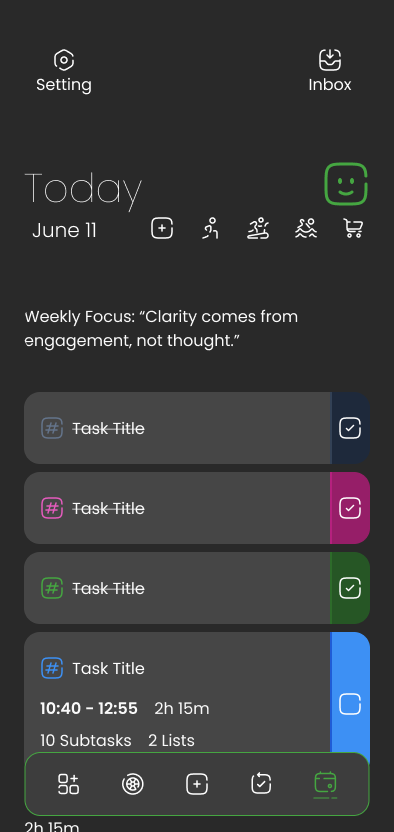
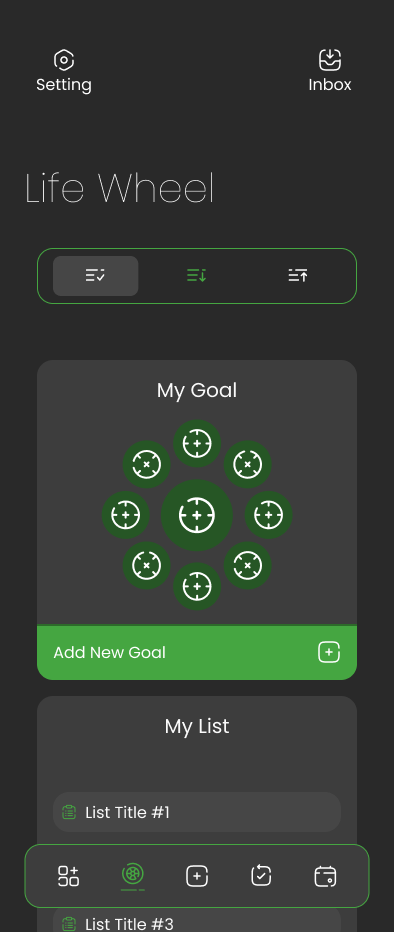
Objective
We found a gap in planners. People with real goals don't fail from lack of effort. They fail because their plans aren't anchored to what matters to them, and because planners stay fixed while life changes. Our objective: a planner that keeps values, life areas, goals and daily actions aligned, and adapts with the user.
Scope: Discovery to Delivery
1. Discovery
Problem, users, method tests
2. Definition
Positioning, segments, structure
3. Design
Data model, flows, design system
4. Delivery
Spec, app, admin panel, roadmap
My Role: Product Lead
I lead Sabz end to end: I frame the problem, define the product and its data model, design the flows, and set the direction for design and development. I lead a team of 2 designers and 3 developers, working with our CTO.
Background
Company
Pardazesh Gostar Havin is an Isfahan-based technology company (est. 2016) building AI-driven software for health, fintech and education. Sabz is its new consumer product.
The Problem
People set a goal, follow a system for a while, drift, and start over. Goal-driven people who have tried planners hit one of two walls:
Wall 1
"I followed the system and never got what I wanted."
Wall 2
"I got exactly what I wanted, and it didn't make me happy."
Discovery: Proving the Method Before the App
We tested the method in three rounds, each with more structure, before writing any app code.
Paper
Manual system
Excel
Structured version
Notion
Connected database
App
Design & development
100+
people tested the method
6–8
months of mentor-led use
13+
supervised groups
37
competitor products reviewed
Positioning: A Compass, Not a Lighthouse
Other planners
Lighthouse
One fixed beam on one distant goal. It doesn't move when life changes course.
Sabz
Compass
Values, life areas, goals and actions stay aligned, and the whole system recalibrates with you.
Retention by design: the Hook Model
Trigger
Review reminders
Action
Plan the day
Reward
See progress across life areas
Investment
Every value and reflection makes it more yours
Who It's For
Primary
Reset Seeker
Productivity veteran, 28–45, who keeps restarting planning systems.
Secondary
System Builder
Built a life-OS in Notion, then gave up maintaining it.
Later
Method Graduate
Just finished a coaching program, with no tool to keep it going.
Not for: casual organizers, meeting-heavy executives, or teams.
From Method to Product
Sabz is built on an NLP-based planning method. I translated each part of the method into a feature, and left out what would turn the app into homework.
In the method
In the app
10-year vision to 90-day sprint
Long & Short Term Goals by horizon
Well-formed (NLP-SMART) goals
Goal form with control check and a mandatory first action
Life Wheel & paired comparison
Up to 8 Dimensions and a "booster" dimension
Value clarity
Values linked to dimensions
Write → Act → Sense → Adapt
Weekly → Monthly → Quarterly → Yearly reviews
Product Architecture
Every action traces back to a value
App map
I mapped the user flow for each of the 18 modules. From the home page, everything sits under five entry points:
Today
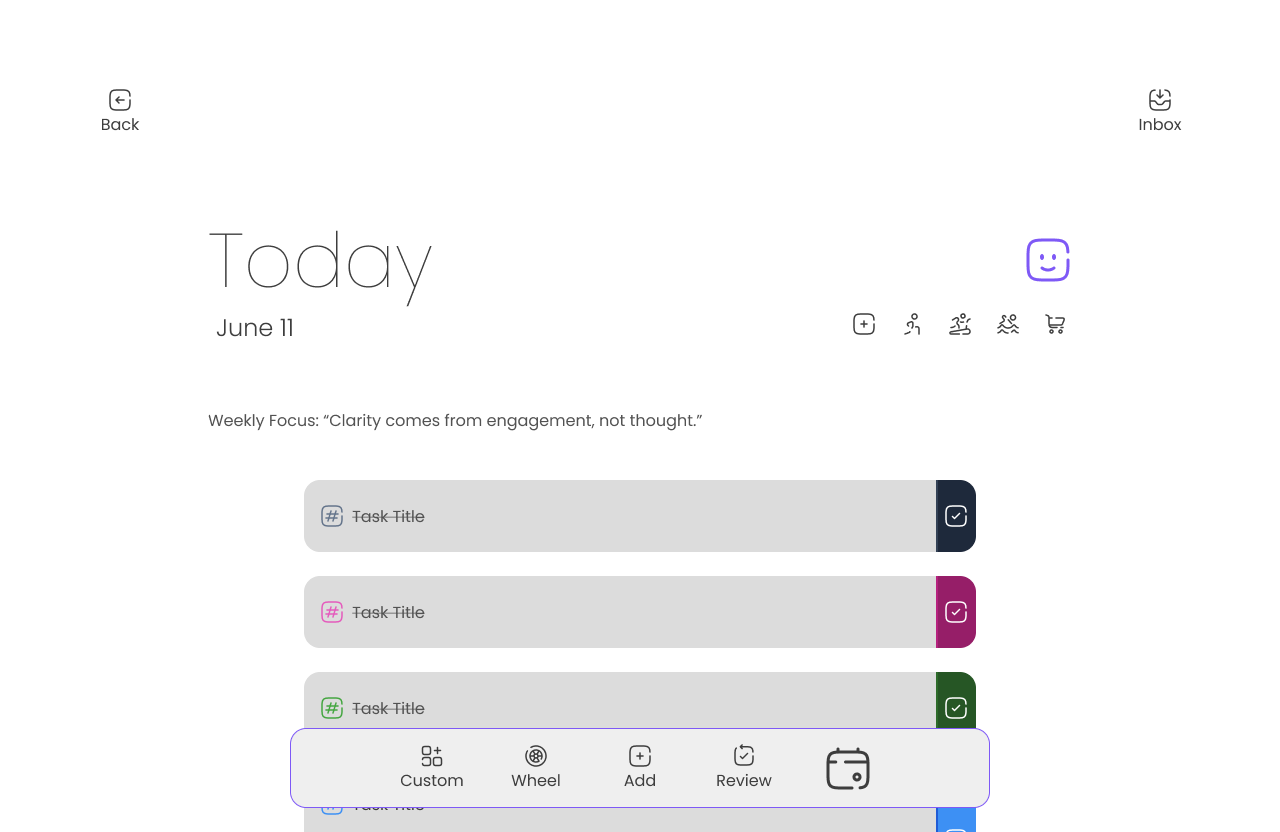
Mood, tasks, habits, journal
Wheel
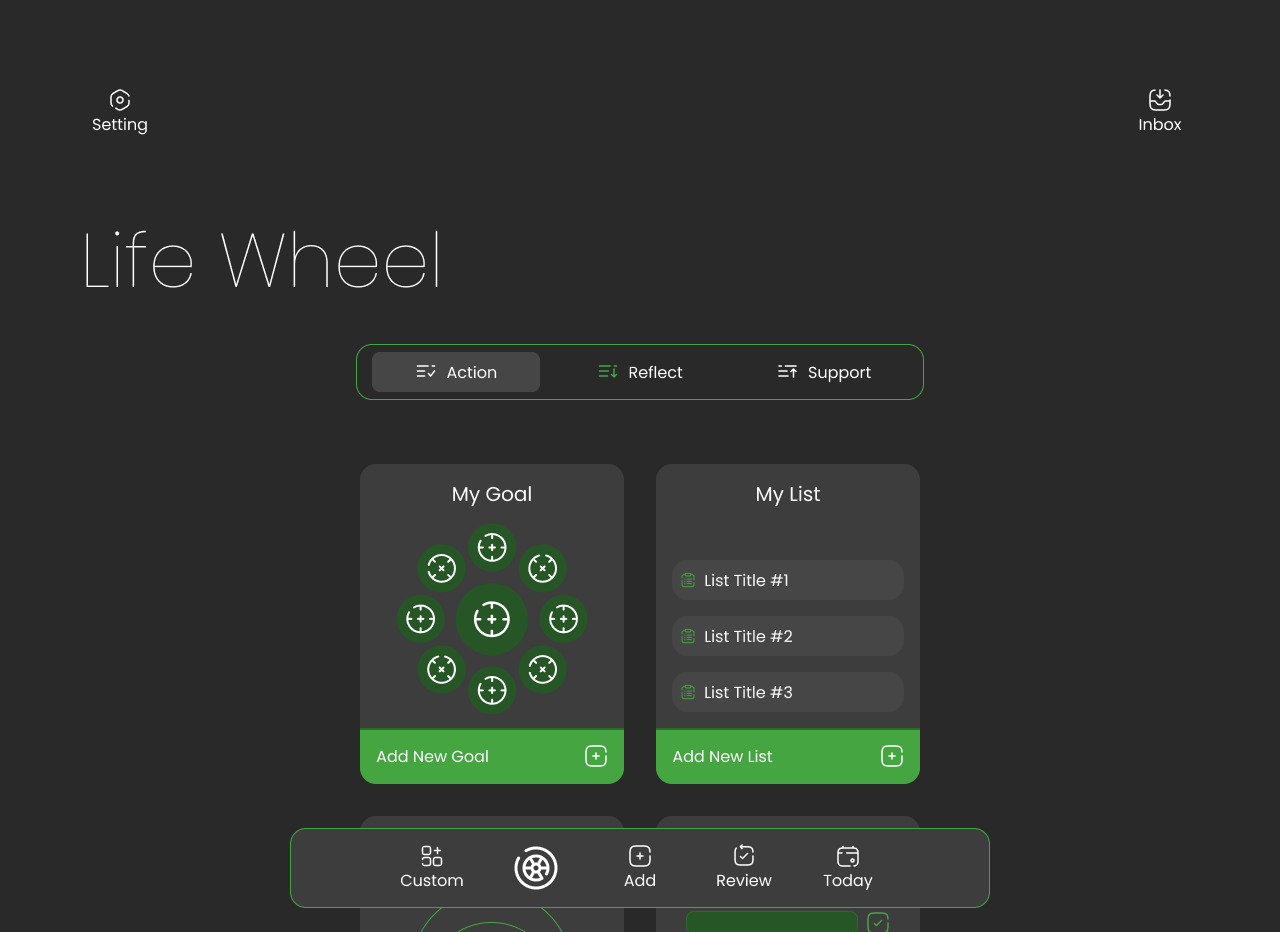
Action: goals, lists, habits, tasks
Reflect: values, dimensions, strategy, mindset
Support: resources, projects
Add
Quick capture of any item
Review
Weekly, monthly, quarterly, yearly: success, improvement, gratitude, mood
Custom
User-defined shortcut
One source of truth
Designs, flows, the database and business notes lived in different files. I brought them into one Notion spec, with features, entities, rules, a glossary and a dated conflict log, so the whole team builds from the same answer.
Design System
I set the design direction; our designers built a design system with three levels of tokens, so one change flows through all 503 screens across 4 breakpoints.
Level 1
Primitives
Raw values
Poppins 76 / 20 / 16 · spacing 4–80
Level 2
Semantic
Meaning
Surface/action
Surface/page
Text/on-action
Level 3
Component
Where it's used
Add New List +Key Screens
Today
Each task carries the color of its life area, so even a checklist shows what it serves.
Life Wheel
The main navigation, grouped into Action, Reflect and Support.
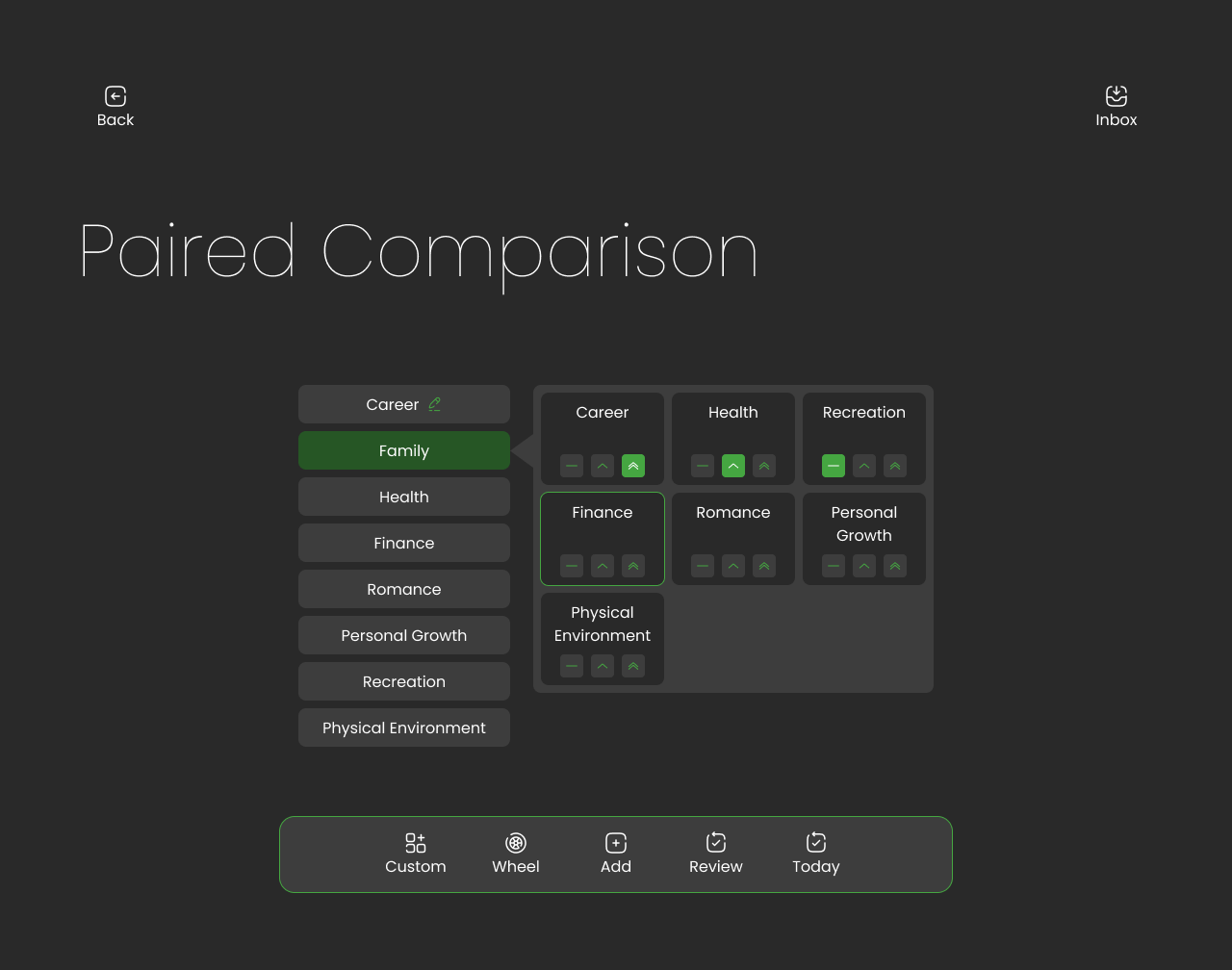
Paired Comparison
Find the life area that lifts all the others.
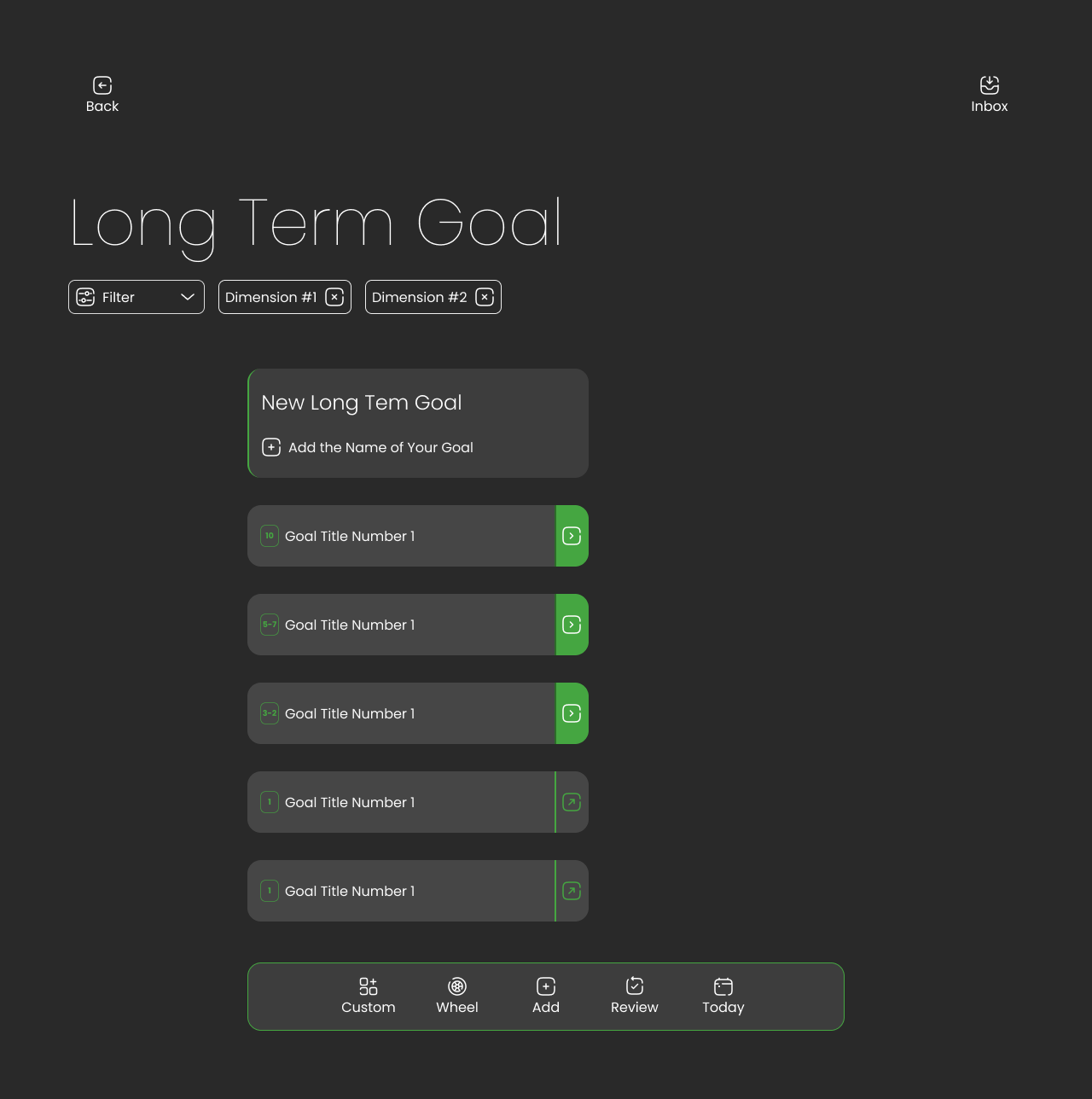
Long Term Goals
Goals by horizon, from 10 years to 1 year.
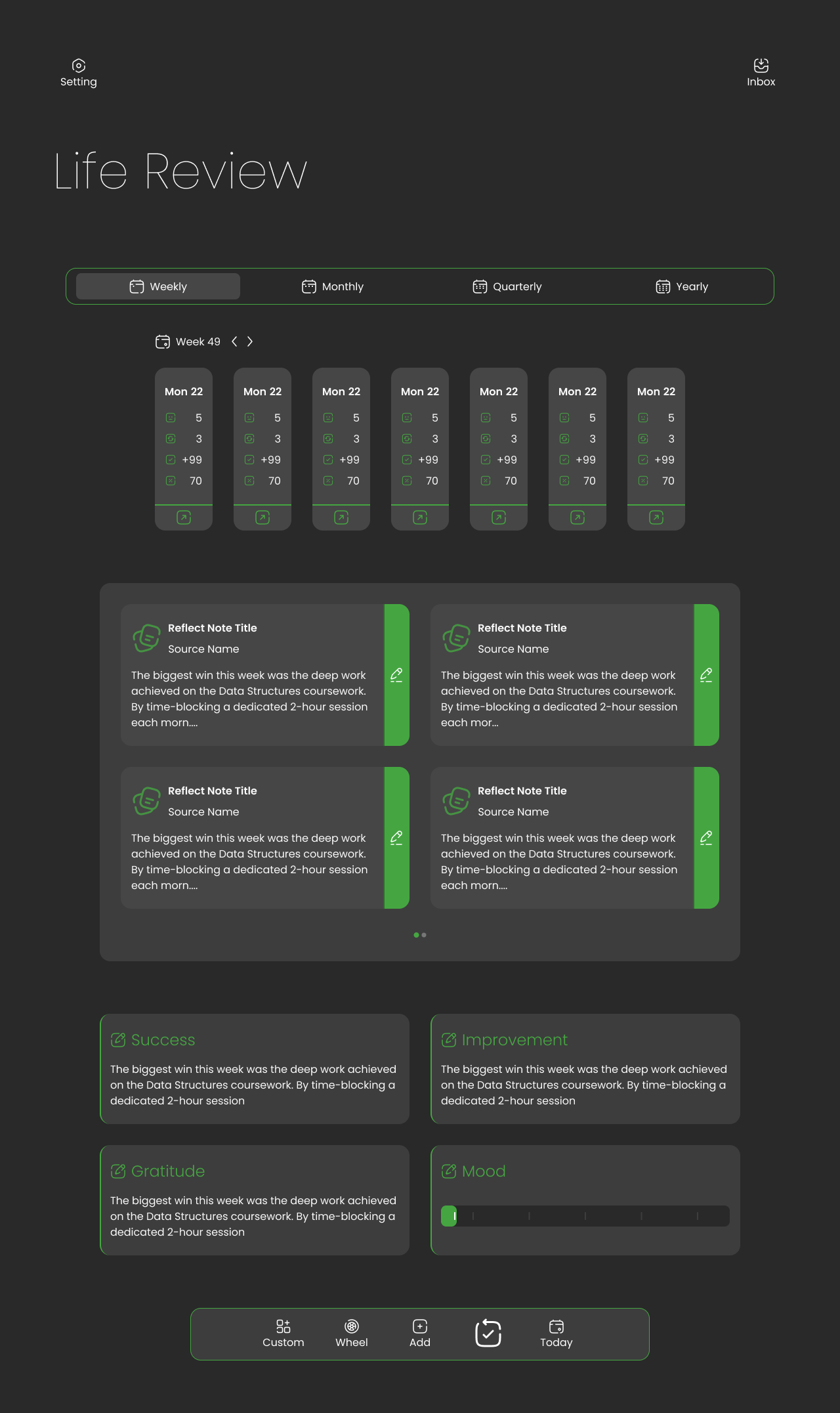
Life Review
The weekly review that rolls up into the year.
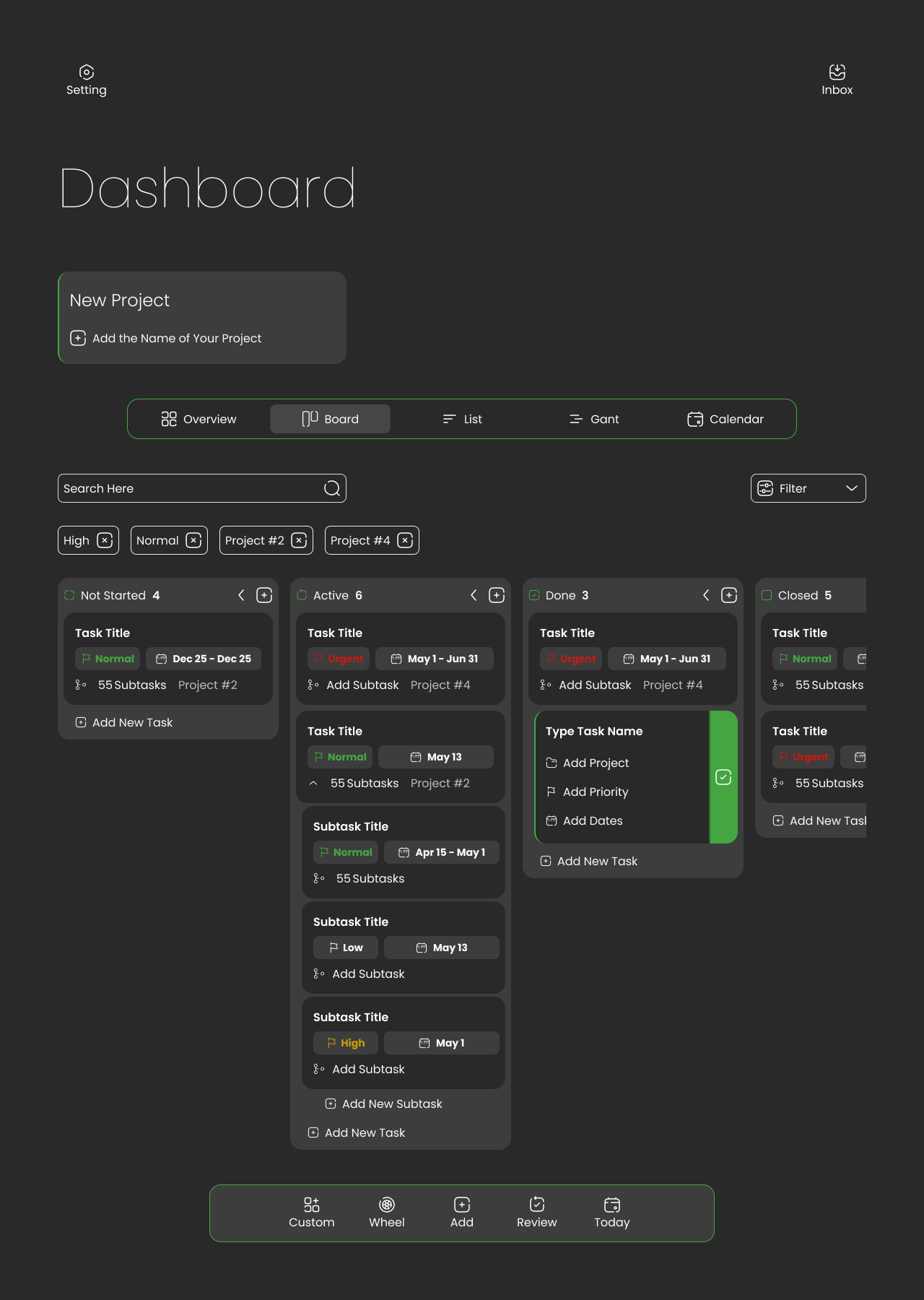
Projects
Board, list, calendar and Gantt views.
Admin Panel
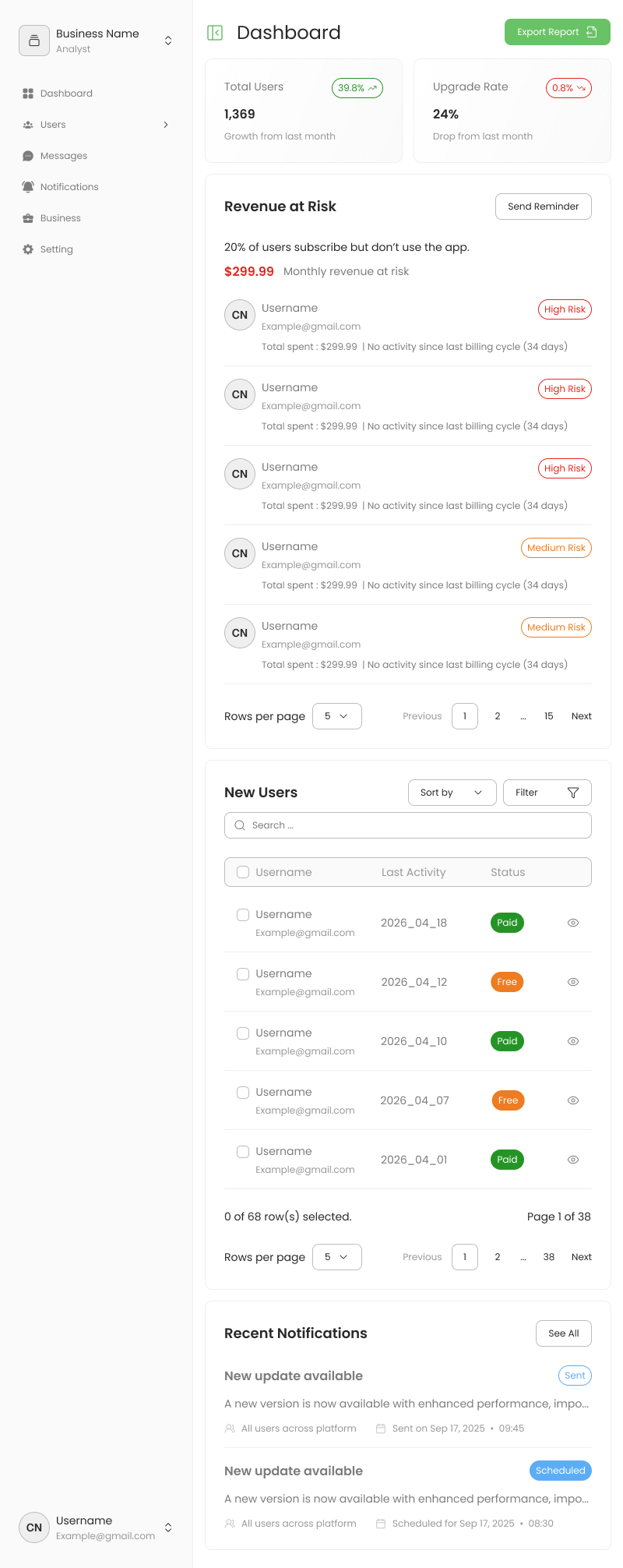
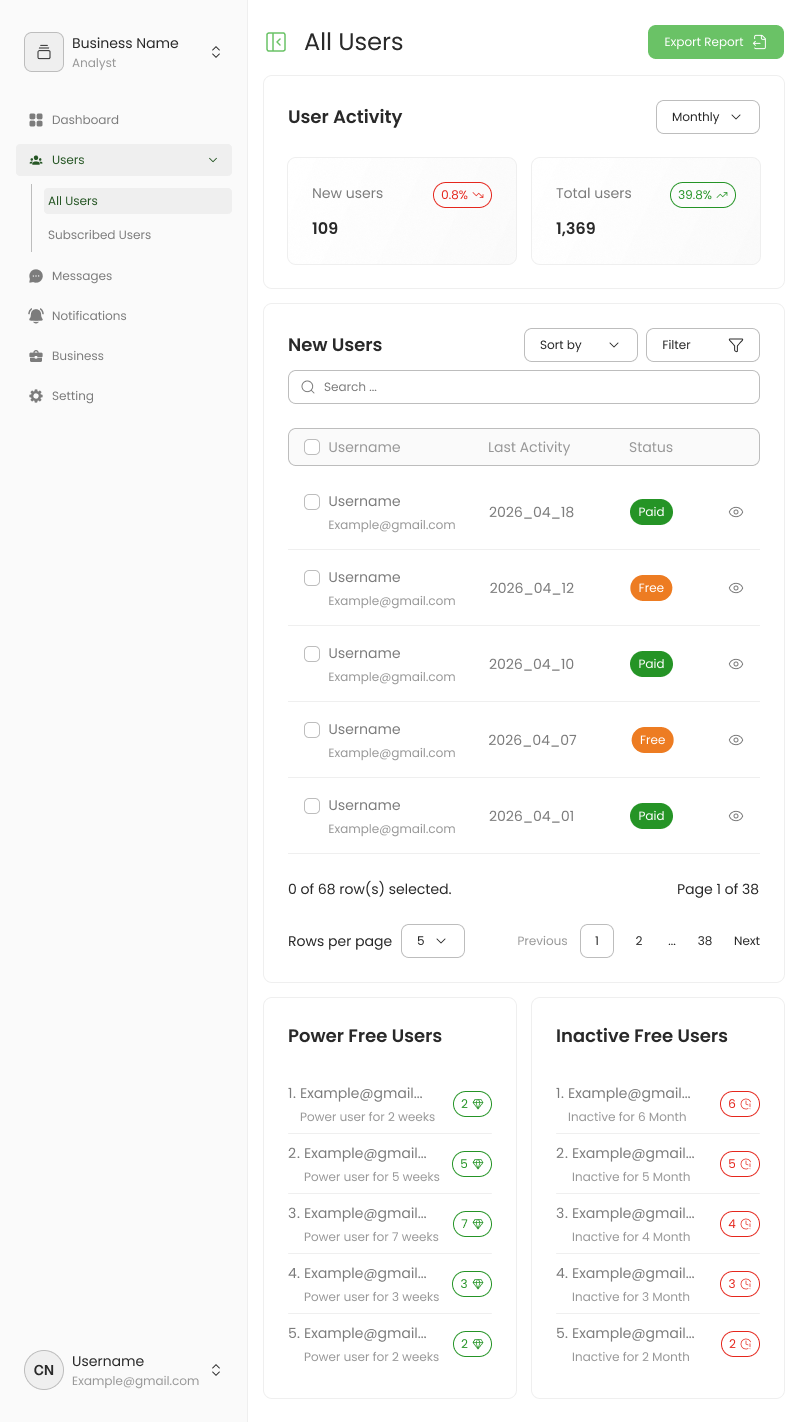
Beyond the app, we designed a full admin panel so the business can run Sabz: track revenue at risk, manage users and subscriptions, and talk to users.
Delivery & What's Next
Now
- Frontend built
- Backend & admin panel in development
Next 3 months
- Closed beta
- 4-week retention benchmark
- Paid pilot for annual pricing
6–12 months
- AI: goal setting, reflection prompts
- Gamification that rewards consistency
Learnings
#1
Validate the method before the app
Paper, Excel and Notion let 100+ people use the method for months before any code. We designed something already proven.
#2
A method is not a product
The hardest product call was what to leave out, so the app stays light enough to use every day.
#3
One source of truth saves weeks
One name per concept and a dated decision log ended long debates and gave developers one answer to build against.